Seasonal
How to pet-proof your Christmas tree, lights and holiday plants
Why tinsel and ribbon are the big risk for cats, how to anchor the tree and cover its water, which holiday plants matter (lilies, holly, mistletoe) and what to do if your pet chews something.
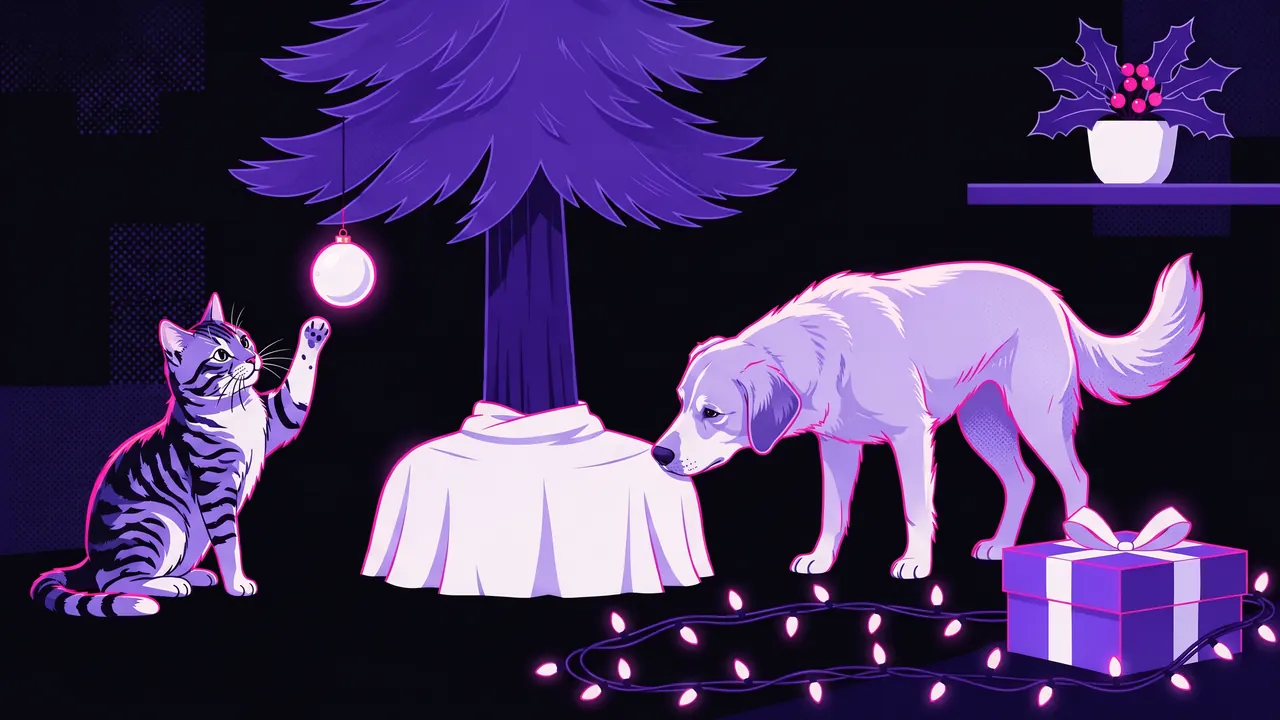
Thanksgiving weekend is when a lot of trees go up, and it's also when curious cats and dogs meet a pile of new things to climb, chew and swallow. Veterinary poison centers see the same problems every December. Here is what the ASPCA, Pet Poison Helpline, VCA Animal Hospitals and Cornell's Riney Canine Health Center say matters most, and how to set up your decorations so you don't spend the holidays at the emergency vet.
The biggest risk: tinsel, ribbon and anything stringy
If you only change one thing, make it this. Pet Poison Helpline's advice for cat households is blunt: tinsel belongs in the garbage. Tinsel, ribbon, yarn and curling string can become a linear foreign body. The strand wraps around the base of the tongue or anchors in the stomach, and as the intestines contract, it can saw through the tissue. Treatment is abdominal surgery. The ASPCA warns that swallowed tinsel can cause severe vomiting, dehydration and an obstructed digestive tract.
Pet Poison Helpline also notes that cats with a ribbon obstruction can keep eating and drinking for a while, so the absence of symptoms doesn't mean everything passed. If you see string hanging from your pet's mouth or rear end, don't pull it. Call your vet.
- Skip tinsel and loose garland strands in homes with cats.
- Keep wrapped gifts with ribbon away from pets until they're opened, then bag the ribbon right away.
- Put yarn, thread and gift-wrap string in a closed drawer.
Anchor the tree and cover the water
Both the ASPCA and Pet Poison Helpline say to secure the tree so a climbing cat or a bumping dog can't tip it. Pet Poison Helpline suggests securing it at the top and the bottom, for example with a sturdy base plus a line to a wall hook.
Then deal with the stand. The ASPCA says tree water can contain fertilizer and other chemicals and becomes a breeding ground for bacteria that can cause nausea, diarrhea or stomach upset. Cover it with a tree skirt or a stand cover so pets can't drink from it. Cornell adds that swallowed pine needles can irritate the mouth and cause vomiting, diarrhea or, rarely, an obstruction or perforation, so sweep up dropped needles often. Pet Poison Helpline suggests an artificial tree if your cat can't leave a real one alone.
Lights, cords and ornaments
- Cords: chewed light strands can cause burns in the mouth and electrocution, especially in cats and puppies, according to VCA and Pet Poison Helpline. Keep strands short, tucked and off the floor, and unplug the tree when you aren't home. If you find a chewed cord, Pet Poison Helpline advises getting your pet checked by a vet right away.
- Bubble lights: older bubble lights may contain methylene chloride, which VCA says can irritate the mouth and gut and can lead to aspiration pneumonia if chewed.
- Glass ornaments: broken shards can cut the mouth and damage the digestive tract. Hang breakables high, and use shatterproof ornaments on the bottom third of the tree.
- Salt-dough ornaments: these homemade decorations can cause salt toxicity, a dangerous electrolyte imbalance, even when dry (ASPCA, Cornell).
- Batteries and snow globes: a punctured battery can burn the mouth and esophagus, and Cornell and the ASPCA note snow globes can contain ethylene glycol, the toxic ingredient in antifreeze. See our antifreeze guide for why that matters.
Holiday plants: which ones really matter
| Plant | What the experts say | What to do |
|---|---|---|
| Lilies (common in bouquets) | Can cause kidney failure in cats; Pet Poison Helpline says even the pollen and vase water are thought to be poisonous | Keep them out of any home with a cat |
| Holly and mistletoe | Gastrointestinal upset, and cardiovascular problems in some cases (ASPCA) | Keep out of reach or use artificial versions |
| Poinsettia | Only mild to moderate stomach irritation, per the ASPCA; less dangerous than its reputation | Keep it out of reach, but no need to panic |
The ASPCA suggests faux plants or decorations made from wood, fabric or pinecones if you have pets that chew. Check bouquets that guests bring, too. If you're hosting, our guide to helping a nervous dog with holiday houseguests covers the other half of the season.
Give them something better to climb and chase
A cat that climbs the tree is usually a cat looking for height and something to bat at. Redirecting that energy works better than shooing. A sturdy cat tree placed in the same room gives a climber its own lookout:
Scatter a few safe toys around so there's always something to chase that isn't hanging from a branch. Choose toys that are sized for your pet and check them for loose strings or pieces, since the same linear foreign body risk applies to frayed toys.
For dogs, a stuffed food toy can keep a bored dog busy while the house is full of new smells and wrapped food under the tree. The ASPCA points out that pets can smell food inside wrapped presents, so keep edible gifts up off the floor. We compared more options in Best Cat Trees, Scratching Posts & Interactive Toys and Best Dog Toys for Chewing & Enrichment.
If your pet eats something
Don't wait for symptoms and don't try to make your pet vomit unless a vet tells you to. Call your veterinarian, a 24/7 emergency hospital, or a poison hotline:
- ASPCA Animal Poison Control Center: (888) 426-4435
- Pet Poison Helpline: (855) 764-7661
Both may charge a consultation fee. Save the numbers in your phone now, along with your nearest 24-hour emergency vet, as Cornell recommends. For tomorrow's meal, see our list of Thanksgiving foods that are safe and unsafe for dogs and cats.
Sources: ASPCA, "Holiday Safety Tips" and "Top Ten Holiday Dangers for Pets"; Pet Poison Helpline, "Cats and Christmas Trees" and "Holiday & Winter Toxins"; VCA Animal Hospitals, "Holiday Toxins for Pets"; Cornell University College of Veterinary Medicine, Riney Canine Health Center, "Holiday hazards for dogs" (accessed November 2026).