Seasonal care
Holiday houseguests and a nervous dog: how to set up a calm safe room
How to tell when visitors stress your dog, set up a quiet retreat room, handle the doorbell, brief your guests and decide whether a calming supplement is worth trying.
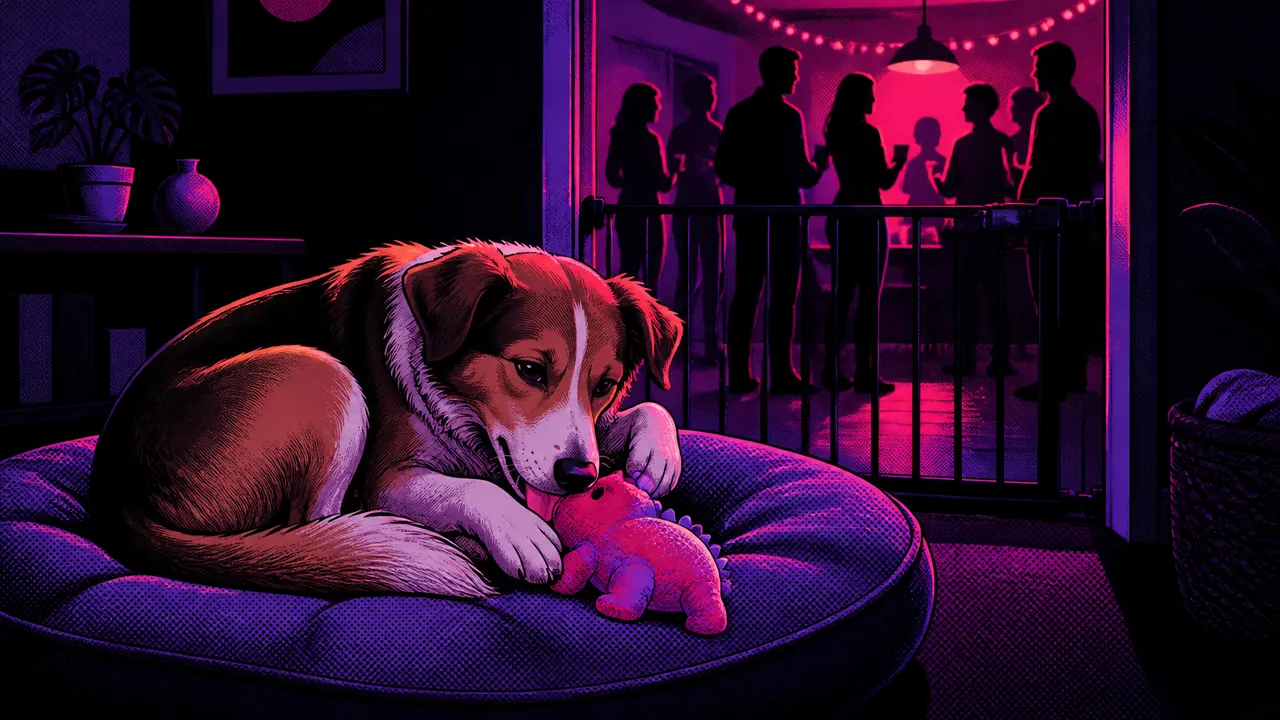
Thanksgiving through New Year's means doorbells, new smells, loud kitchens and people who all want to say hi to the dog. Some dogs love it. Others spend the evening pacing, barking or hiding under the bed. A little setup before the first guest arrives makes the season easier for both of you.
Know your dog's limits first
The American Kennel Club's advice starts with personality. Some dogs adapt well to chaos, while others need a predictable routine, and some get anxious around children or strangers. Don't expect a nervous dog to simply cope. The AKC warns that a stressed dog may act out or even become aggressive.
The American Animal Hospital Association (AAHA) lists common signs of stress to watch for:
- Hiding
- Pacing or restlessness
- Excessive barking or vocalizing
- Panting when it isn't hot
If you see these, it's time for a break, not one more round of greetings.
Set up a quiet retreat room
Both the AKC and AAHA recommend giving your dog a calm space away from the gathering. Set it up a few days early so it already feels normal:
- Pick the spot. A spare bedroom, home office or the crate moved to an out-of-the-way corner. It should be easy for your dog to reach but away from the front door and kitchen.
- Make it familiar. Add your dog's own bed, a blanket that smells like home, toys and a bowl of water.
- Close it off. A baby gate or closed door keeps curious guests and kids out. The AKC suggests a dog gate to secure the room during breaks.
- Cover the noise. AAHA suggests calming music or a white noise machine to soften the party sounds.
- Give them a job. A stuffed, frozen chew toy or a puzzle gives your dog something calm to do. Many dogs find licking and sniffing settling.
Practice a few short, happy sessions in the room before the holiday so your dog doesn't link it only with being shut away.
Handle the doorbell rush
The first few minutes, when coats come off and everyone talks at once, are often the hardest part. The AKC suggests putting an excitable or nervous dog in the crate or another room before the doorbell rings, then bringing them out once things have calmed down. If your dog jumps on people, keep a leash on during the party and reward a sit or a down with high-value treats.
Make one person the "dog captain" for the evening. Their job is to watch the dog, hand out rewards for calm behavior and call a break before stress builds.
Brief your guests
You are your dog's advocate. The AKC recommends telling guests exactly how to engage, whether that's ignoring the dog completely or only giving a treat for a calm sit. A few house rules worth sharing:
- Let the dog come to you. Don't reach over its head or follow it when it walks away.
- Leave the dog alone in its room or crate.
- No table scraps. Many holiday foods are risky for pets (see our guide to Thanksgiving foods that are safe and unsafe for dogs and cats).
- Kids never play with the dog unsupervised.
Keep the routine steady
AAHA advises keeping your pet's normal feeding, exercise and bathroom schedule as much as you can. A long walk or a game of fetch before guests arrive helps burn off energy, and a puzzle feeder at dinner time keeps the routine familiar even when the house isn't. For more ideas, see our indoor games that tire out your dog.
Do calming supplements help?
Calming supplements can take the edge off mild stress for some dogs, but they work very differently and none replace the setup above. Two common types:
- Daily probiotics. Purina's Calming Care uses the probiotic strain Bifidobacterium longum BL999. Its label says to give one packet a day and that it may take up to six weeks for full effect, so start well before a busy season.
- As-needed chews. VetriScience Calm & Confident (formerly Composure) combines colostrum, L-theanine and vitamin B1. The maker says it works within about 30 minutes and lasts up to four hours.
Talk to your vet before starting any supplement, especially if your dog takes medication. If your dog's fear is strong, AAHA recommends talking with your veterinarian before the holiday about other ways to help.
When to skip the party altogether
For some dogs, the kindest plan is a quiet evening somewhere else: a trusted friend's home, a sitter or a closed-off room for the whole visit. Nervous dogs should never be forced to interact with visitors, the AKC says. That's not a training failure. It's knowing your dog.
For more picks, see the best dog toys for chewing and enrichment and the best joint, gut and calming supplements.
Sources: American Kennel Club, "How to Help Your Dog Handle Holiday Visitors"; American Kennel Club, "How to Prepare Your Dog for the Holiday Season"; American Animal Hospital Association, "Thanksgiving Pet Safety Tips: Food, Guests, Decorations, and Stress"; Purina Pro Plan Veterinary Supplements Calming Care product label; VetriScience Calm & Confident product information.