Safety
Antifreeze and pets: why a few licks is an emergency, and how to pet-proof your garage
Why ethylene glycol antifreeze is so dangerous to dogs and cats, the early signs, why the clock matters, and simple ways to make your garage and driveway safer this winter.
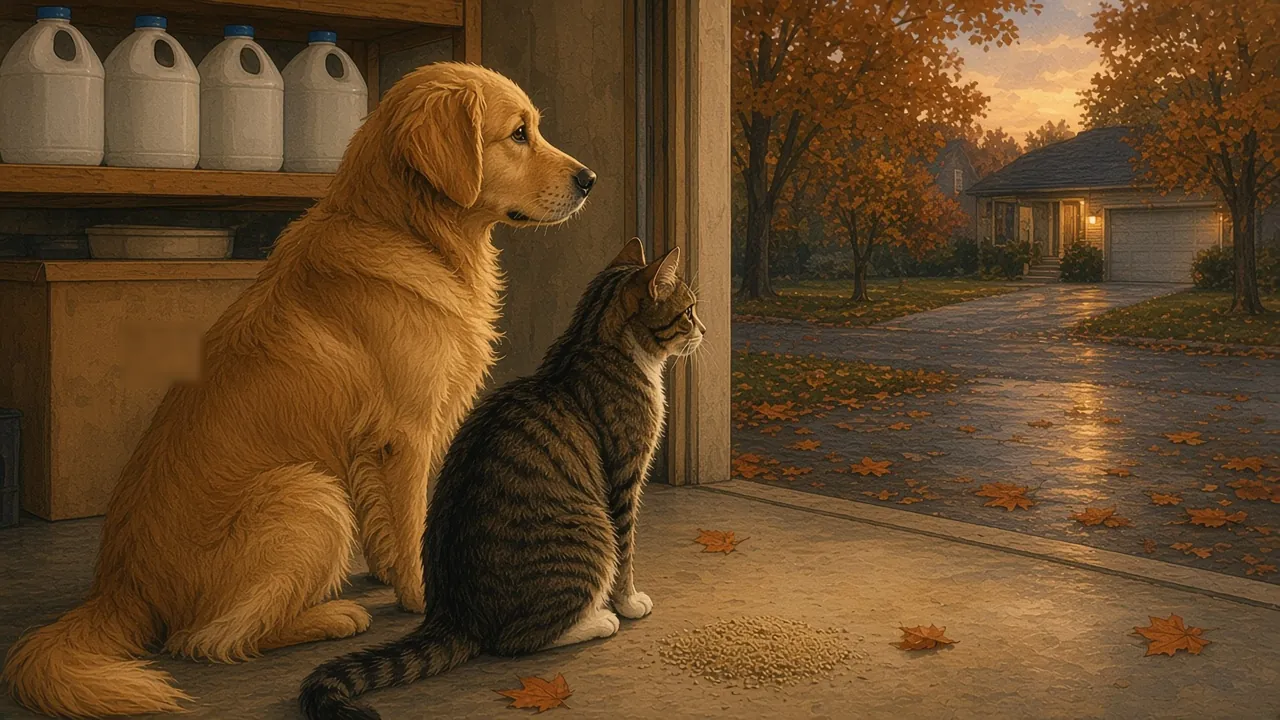
Every fall, people top off coolant, winterize cars and boats, and set jugs of fluid on the garage floor. That's also when veterinarians see more antifreeze poisonings. Most antifreeze is made with ethylene glycol, which tastes sweet, and a dog or cat can swallow a dangerous amount before you notice anything is wrong.
If you think your pet has licked antifreeze, don't wait for symptoms. Call your vet or an emergency clinic right away, and bring the container or label with you. You can also call the ASPCA Animal Poison Control Center at (888) 426-4435.
Why such a small amount is so dangerous
The Merck Veterinary Manual says as little as 3 to 4 teaspoons of undiluted ethylene glycol can kill a dog, and only 1 to 2 teaspoons can kill a cat. That's a puddle under a car or a few licks off a paw.
The body breaks ethylene glycol down into compounds that damage the kidneys. The Merck manual notes that kidney failure can follow within about 36 to 72 hours in dogs and as little as 12 to 24 hours in cats.
Signs to watch for
According to the ASPCA, early signs can include:
- Stumbling or seeming "drunk"
- Vomiting
- Lethargy or depression
- Drinking and urinating more than usual
- Loss of appetite
- Seizures
Pets can become very sick within 6 to 12 hours. The tricky part, per the Merck manual, is that a dog may seem to feel better around 12 hours after drinking it, even while the kidney damage continues. A pet that perks up has not necessarily recovered.
Why the clock matters
There is an antidote, but it works best before the body has converted much of the ethylene glycol. Pet Poison Helpline says cats should be treated within about 3 hours of drinking it and dogs ideally within 6 hours. That's why vets would rather see a pet that turns out to be fine than one that arrives a day later.
How to pet-proof your garage and driveway
- Store jugs up high, capped tight. Keep antifreeze, coolant and windshield washer fluid on a shelf pets can't reach, not on the floor.
- Clean up drips right away. The Merck manual recommends cleaning leaks and spills immediately. Soak up the spill with cat litter or sawdust, sweep it into a sealed bag and rinse the spot.
- Check under the car. A bright green, pink or orange puddle under your car can mean a coolant leak. Get it fixed and keep pets away from that spot until it's cleaned.
- Consider propylene glycol antifreeze. The ASPCA notes it's less toxic than ethylene glycol, but it still isn't safe for pets to drink, so store it just as carefully.
- Don't forget other fluids. The Merck manual notes that some brake and transmission fluids also contain ethylene glycol.
- Supervise garage time. Cats in particular like warm, quiet garages. Keep the door closed when you're working with fluids.
- Wipe paws after walks. Dogs can step in driveway puddles and lick their feet later. A quick wipe with a damp cloth at the door helps, and it also removes road salt.
Swap rock salt for a pet-safe ice melt
While you're winterizing, look at what you spread on your own steps. Rock salt can irritate paw pads, and dogs lick it off their feet. Salt- and chloride-free ice melts are a gentler option for your walkway, though pets still shouldn't eat them.
For boots, paw wax and the rest of our cold-weather picks, see the best cold-weather gear for dogs, and read our guide to winter paw care.
Sources: ASPCA, "Digging Deeper: Getting the Facts on the Dangers of Antifreeze and Your Pets"; Pet Poison Helpline, "Garage and Shed Toxins"; Merck Veterinary Manual, "Ethylene Glycol Toxicosis in Animals."