How-to
How to brush a cat who hates being brushed (and prevent mats and hairballs)
A slow, treat-based plan to get a reluctant cat used to brushing, which tool suits which coat, how to handle mats safely, and when a hairball means a vet visit.
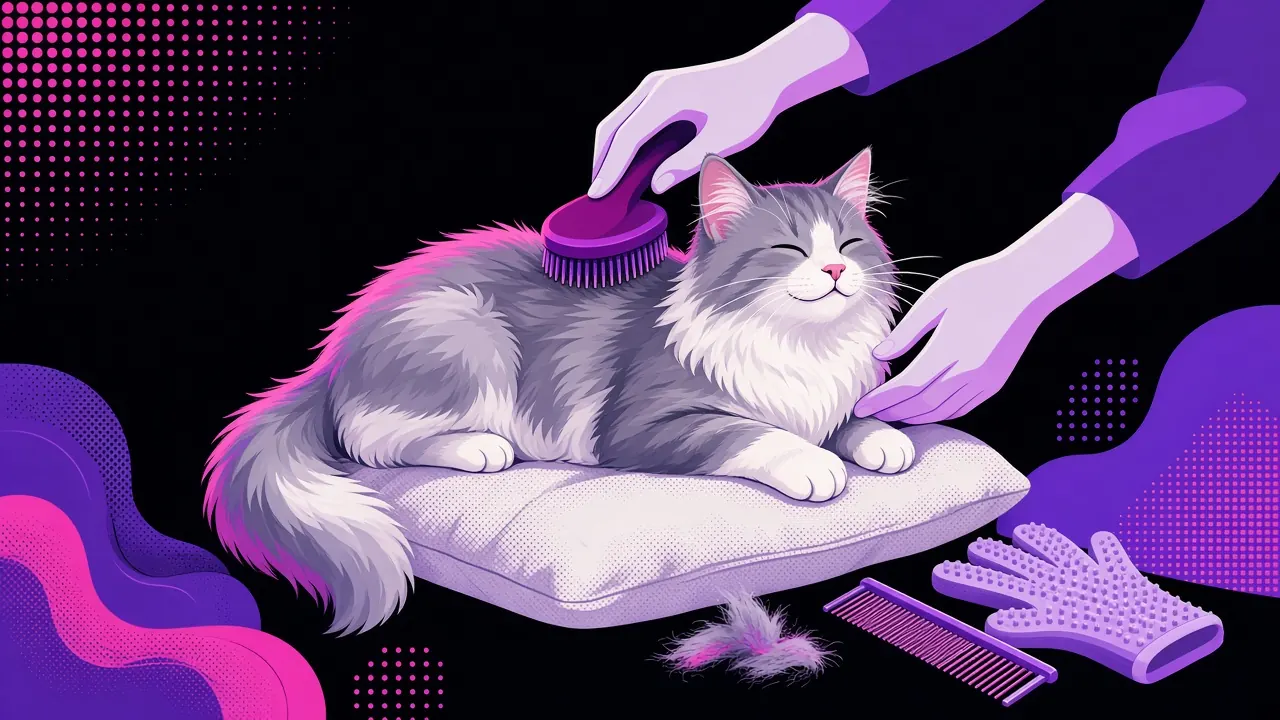
Cats groom themselves constantly, so it's easy to assume they never need a brush. But VCA Animal Hospitals says all cats benefit from regular brushing: it removes loose hair and dead skin, keeps the coat clean and spreads natural skin oils. For long-haired cats it matters even more, because mats are painful and stressful to remove. The trouble is that plenty of cats bolt the moment a brush appears. Here is a slow, vet-backed way to change that, plus which tool to reach for and when to hand the job to a professional.
Why some cats hate the brush
Zoetis Petcare explains that brushing, like petting, can overstimulate many cats. Others learned to dislike it because they were held down and brushed in spots they didn't like, or they simply never got used to it as kittens. The fix is the same in every case: never force it, and make the brush predict good things.
The slow plan: one second at a time
This step-by-step approach follows Zoetis Petcare's and Catster's vet-reviewed guidance. Go at your cat's pace, and if a step goes badly, go back one step.
- Let the brush be boring. Leave it next to your cat's favorite resting spot. When your cat sniffs it, give a treat.
- A touch, then a treat. Let your cat rub against the brush, or touch it to the cheek or head for one second. Treat.
- One short stroke. Brush once on the head or cheek, where most cats like to be touched. Treat.
- Grow the area slowly. Over several sessions, extend to the neck, then the shoulders and back, rewarding often.
- Stop before your cat does. Keep sessions to a few minutes at most and end while your cat is still relaxed. If your cat tries to leave, let it go.
A few habits make it easier:
- Pick a calm moment, such as when your cat is drowsy on your lap, not right after a play session.
- Brush with the grain, in the direction the hair grows, using light pressure.
- Skip the sensitive zones at first. Catster suggests starting at the head and neck; the belly, armpits, rear and tail can wait until your cat trusts the routine.
- Keep them busy. A lick mat with a smear of wet food can buy you a few extra calm minutes.
Expect this to take days or a couple of weeks. That's normal.
How often to brush
VCA says cats with long, silky or curly coats need daily brushing to prevent tangles and mats, especially around the ears, in the armpits and along the back legs. Short-haired cats need less; Catster suggests about once a week. Zoetis adds that senior cats often benefit from extra help because they can find it harder to groom themselves, so use a soft tool and a gentle hand on thinner skin.
Which tool for which cat
For a cat who hates brushes, start with the gentlest option and work up.
Rubber brushes and grooming gloves. Catster calls rubber curry brushes and grooming gloves a good choice for cats who dislike brushing, though they won't work out tangles. A glove can feel more like petting than brushing:
Slicker brushes. Fine bent wires are good at working out tangles before they become mats. Go lightly; the wires can scratch if you press hard.
Metal combs. VCA notes that long-toothed metal combs help remove loose hair and smooth minor tangles in medium and long-haired cats. A comb is also the best way to check your work: if it glides from skin to tip, there's no hidden tangle.
Deshedding tools. For long-haired cats with a thick undercoat, a deshedding edge pulls out loose undercoat that a brush leaves behind. Use it on a dry, tangle-free coat, weekly at most, and stop if you see redness.
What to do about mats
Small tangles can often be worked loose with your fingers or a comb, holding the hair near the skin so you don't pull. But be careful with anything sharp:
- Never use scissors on a mat. VCA and PetMD both warn against it. Cat skin is thin and pulls up into the mat, so it's easy to cut. VCA says to use clippers, not scissors, if a clump has to come out.
- Be wary of mat splitters, too. A groomer quoted by PetMD warns that any mat splitter can slice the skin under matted fur.
- Brush before baths, not after. VCA notes that tangles can become impossible to remove once they're wet.
- Call in help for big or painful mats. If mats are extensive or the skin underneath looks irritated, VCA recommends a groomer or your vet.
Brushing and hairballs
Every hair you brush out is one your cat doesn't swallow. Cornell's Feline Health Center recommends getting your cat used to daily brushing and combing to help prevent hairballs, and suggests a professional haircut once or twice a year for long-haired cats who won't allow it.
Cornell also says the occasional hairball, roughly once every week or two, is usually nothing to worry about. Call your vet promptly if your cat:
- Retches repeatedly without bringing anything up
- Is lethargic or refuses food for more than a day or so
- Coughs or hacks often, since that can be a sign of asthma rather than hairballs
Cornell notes that a hairball can occasionally cause an intestinal blockage, which needs veterinary care.
For more on cats who resist handling, see our guides to brushing your cat's teeth and carrier training before vet visits. All five tools above are ranked in Best Dog & Cat Grooming Tools.
Sources: VCA Animal Hospitals, "Grooming and Coat Care for Your Cat"; Zoetis Petcare, "Cat Brushing 101"; Catster, "How to Brush a Cat That Doesn't Want to Be Brushed" (vet-reviewed); PetMD, "How to Brush a Cat"; Cornell Feline Health Center, "A Hairy Dilemma" (accessed November 2026).