How-to
How to brush your cat's teeth (and what helps if your cat won't let you)
A four-week plan to get a cat used to brushing, plus VOHC-accepted treats and powders for cats who refuse, and the signs that mean a vet visit.
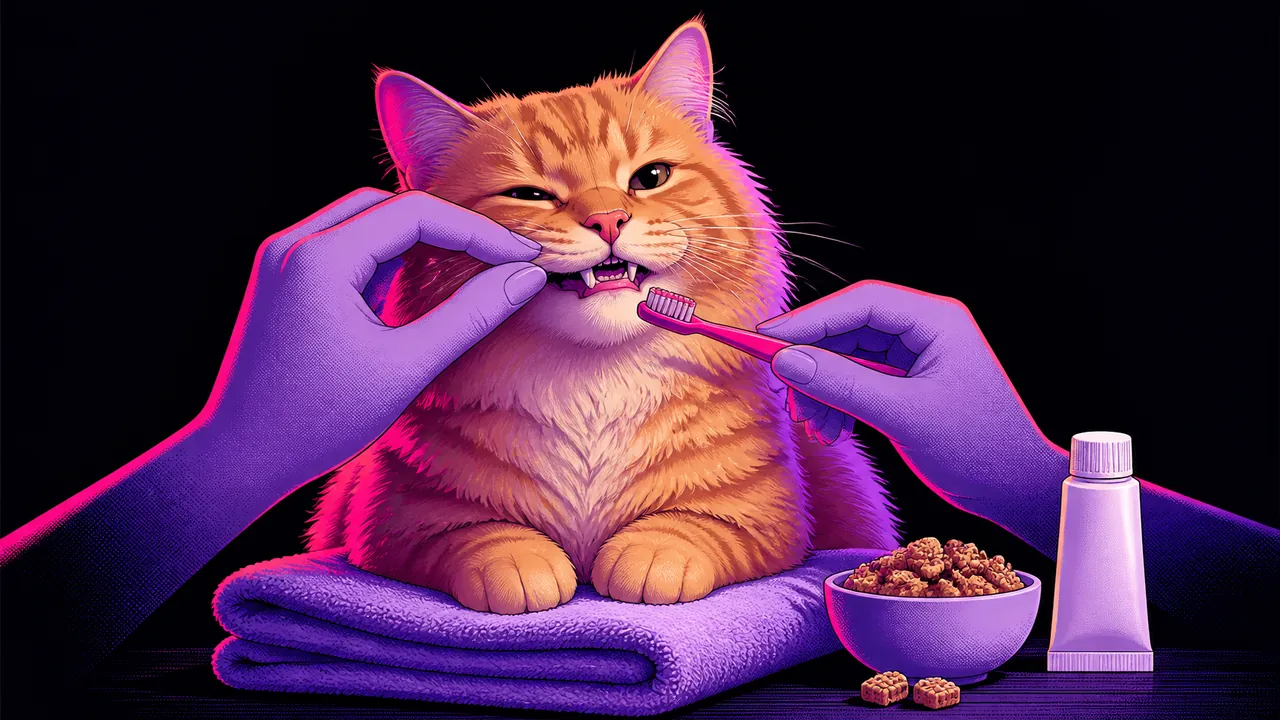
Dental disease is one of the most common health problems in cats. Cornell's Feline Health Center cites studies finding that 50 to 90% of cats older than four have some form of it, and it can be painful enough to put a cat off its food. The good news: the most common forms are largely preventable with home care. Here is how to start brushing, based on Cornell's four-week plan, plus what to try if your cat simply won't cooperate.
Why brushing matters more than anything else
Plaque, a bacterial film, builds up on teeth constantly. Left alone, it hardens into tartar and can lead to gingivitis (red, swollen gums). Cornell notes that gingivitis is usually reversible, but if it isn't controlled it can progress to periodontitis, which eventually cannot be reversed and can mean loose teeth and extractions. Cornell calls regular tooth brushing the best way to prevent gingivitis, and a Cornell veterinary dental technician points out that plaque starts to build up again within 12 hours of a cleaning.
One rule before you start: use only a toothpaste or gel made for cats. Cornell warns that human toothpaste is not safe for cats.
What you'll need
- A small cat toothbrush or finger brush
- An enzymatic toothpaste labeled for cats
- A reward your cat loves, such as a favorite treat
A kit takes the guesswork out of matching paste and brush:
The four-week plan
Cornell's Feline Health Center lays out a gradual routine. Go at your cat's pace; if a step goes badly, repeat the previous week.
- Week 1: smell and lick. Leave the brush and paste out where your cat can inspect them. Each day, let your cat sniff and lick a dab of paste from your finger, then give a reward.
- Week 2: taste on the teeth. Put a dab of paste on one of the canine teeth (the long fangs) every day, followed by a reward.
- Week 3: meet the brush. Put a little paste on the brush and let your cat lick it off. Reward again.
- Week 4: brush. Gently stretch the lips back and slide the brush between lips and gums. Hold the bristles at a 45-degree angle, aimed at the gumline, and work gently around the upper and lower teeth.
You only need to brush the outside surfaces of the teeth. Cornell explains that a cat's tongue does a good job on the inside surfaces. Don't pry the mouth open; lifting the lips is enough. Aim for daily brushing, and pair it with something your cat already enjoys, like dinner, so it becomes part of the routine.
Important: if your cat already has red, swollen or bleeding gums, brushing can hurt. Cornell advises talking to your vet before you start brushing a cat with gingivitis.
If your cat won't let you brush
Some cats will never accept a toothbrush, and that's okay. Other products can help, though none fully replace brushing. Look for the Veterinary Oral Health Council (VOHC) seal, which is awarded to products that meet preset standards for reducing plaque or tartar. The VOHC's current list for cats includes dental treats, a food powder and water additives.
A daily powder is the most hands-off option:
ProDen PlaqueOff contains Ascophyllum nodosum, a seaweed. The maker says results build over about four weeks of daily use, that it doesn't remove tartar that's already hardened, and that cats with hyperthyroidism or iodine sensitivity should check with a vet first because the seaweed contains natural iodine.
Dental treats with the VOHC seal are another easy add-on. Count them toward your cat's daily calories:
Your vet may also suggest a prescription dental diet for cats who can't be brushed.
Signs your cat needs a vet, not a toothbrush
Home care keeps healthy mouths healthy; it doesn't fix existing disease. Book a vet visit if you notice:
- Bad breath (Cornell notes it can also signal kidney, liver or other illness)
- Red, swollen or bleeding gums
- Drooling, chewing on one side or turning the head while eating
- Dropping food, eating less or suddenly preferring soft food
- A pinkish spot where a tooth meets the gum, which can be a sign of tooth resorption, a painful condition Cornell says affects 30 to 70% of cats
Hardened tartar has to be removed with a professional cleaning, usually under anesthesia, so ask your vet to check your cat's teeth at every visit.
For dogs, see our two-week plan for brushing your dog's teeth and what the VOHC seal actually means. All five cat products above are ranked in Best Dog & Cat Dental Care.
Sources: Cornell Feline Health Center, "Feline Dental Disease" and "Bad Breath: Sign of Illness?"; Cornell University College of Veterinary Medicine, "Veterinary tips for pet dental care"; Veterinary Oral Health Council, "VOHC Accepted Products" (accessed November 2026); Swedencare, "ProDen PlaqueOff Powder for Cats" product page.