How-to
Cat carrier training: how to make vet visits less of a fight
Why a top-opening hard carrier helps, how to turn the carrier into a daily hangout, and how to get a reluctant cat in calmly on vet day.
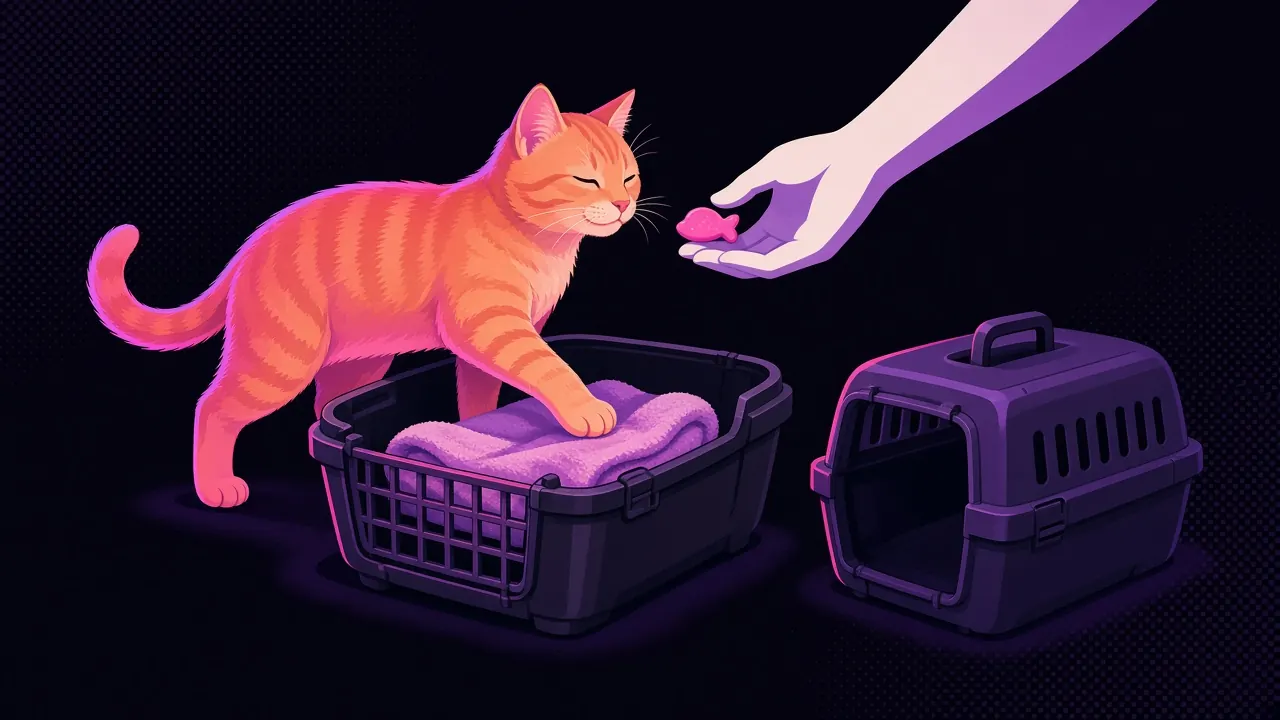
Plenty of cat owners know the routine: the carrier comes out of the closet, the cat vanishes under the bed, and everyone arrives at the vet already stressed. Feline vets say most of that fight can be trained away, and the right carrier makes the vet visit itself easier too. Here is what the American Association of Feline Practitioners (AAFP) and the AAFP and ISFM feline-friendly handling guidelines recommend.
Pick a carrier your vet can work with
The AAFP's advice is specific. The best carriers are inexpensive hard-sided ones that open from the top and the front and can be taken apart in the middle. With the top lifted off, a cat that is fearful, anxious or in pain can stay in the bottom half while the vet examines it, instead of being pulled out or tipped out onto the table.
Hard plastic is also the easiest to clean if your cat has an accident on the way. Soft carriers can work, the AAFP says, if they have a large top opening, ideally doors at both ends, and sides that don't collapse when the door is open. It advises against backpack-style carriers, which don't give a cat enough room to move and can feel unstable. And if you have two cats, give each one its own carrier, even if they get along at home.
Make the carrier part of the furniture
The biggest change you can make costs nothing. Most cats only see the carrier right before something unpleasant, so they learn to dread it. Turn that around:
- Leave it out all the time in a room your cat likes, with the door open or removed.
- Start with just the bottom half. Cat behaviorist Marci Koski told New York Magazine's Strategist that she leaves the base of her carrier out with bedding in it, so her cats nap there and get their scent on it before the top goes back on.
- Add something soft and familiar, like a towel or a T-shirt that smells like you. Hard plastic alone isn't comfortable.
- Reward every visit. Drop treats or a favorite toy inside now and then, and feed meals near it, then just inside it.
- Practice short trips. Close the door for a few seconds, then longer. Pick it up and set it down. Later, carry it to the car and back without going anywhere.
Go at your cat's pace. If your cat backs away, go back a step for a few days.
Getting a reluctant cat in on vet day
If the appointment is coming up and your cat isn't used to the carrier yet, the AAFP and ISFM guidelines suggest:
- Get the carrier ready first. Put in familiar bedding and a treat. The guidelines also mention spraying a synthetic feline facial pheromone in the carrier at least 30 minutes before you leave.
- Use a small room with few hiding spots. Bring your cat in and close the door before the carrier appears.
- Don't chase. Move slowly and let your cat walk in for treats or a toy.
- Use the top if you have one. Gently lower your cat in through the top door, or take the top half off, let your cat settle in the bottom, and calmly put the top back on.
The ride and the waiting room
- Secure the carrier. The AAFP passes on Center for Pet Safety advice: belt a carrier into the back seat only if it has been crash-tested, and otherwise put it on the floor behind a front seat, which also smooths out the bumps.
- Carry it from underneath. A carrier swinging from its handle and bumping into doorways is unsettling. Hold it level with a hand under the base.
- Cover it if that helps. Some cats relax when they can't see out. A towel over the carrier blocks the view of dogs in the waiting room.
- Ask about a quiet spot. Many clinics will let you wait in the car or an exam room.
Our car travel rankings list the carriers above along with crash-tested options. If your cat's stress shows up as not drinking enough afterward, our guide on getting your cat to drink more water can help, and wand toy play is a good way to help a cat burn off nervous energy once you're home.
When to talk to your vet
If your cat panics, drools, vomits or pants in the carrier despite weeks of practice, tell your vet before the next visit. Some clinics offer pre-visit plans for very fearful cats, and your vet can decide whether anything else would help.
Sources: AAFP, "A Guide to Creating a Cat Friendly Practice" and "Visiting Your Veterinarian"; AAFP and ISFM Feline-Friendly Handling Guidelines (Journal of Feline Medicine and Surgery); New York Magazine's Strategist, "Best Cat Carriers."