How-to
Dog got skunked? What actually removes the smell (and when to call the vet)
The vet-recommended peroxide recipe, why tomato juice fails, which store-bought skunk shampoos to keep on hand, and the warning signs that mean a vet visit.
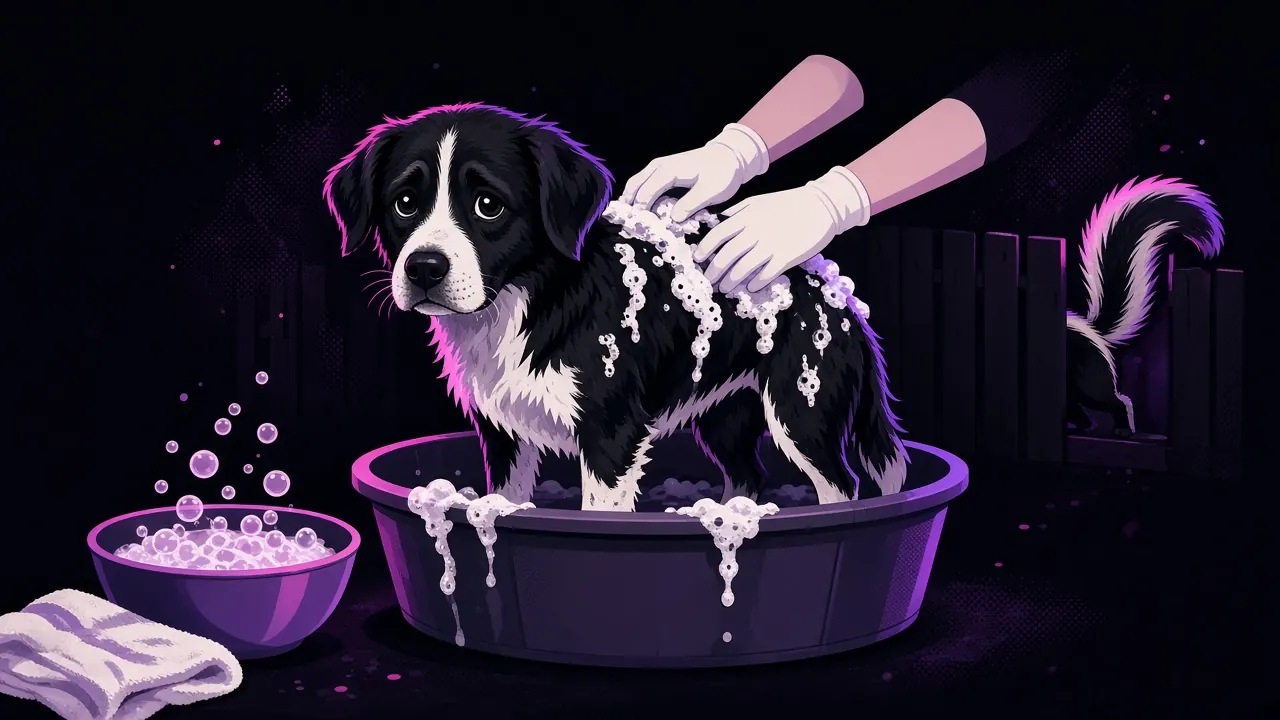
It usually happens on the last potty break of the night. Your dog shoots into the dark, there's a yelp, and then the smell hits. Skunk spray is mostly an odor problem, but not always, and the usual folk remedies waste precious time. Here is what veterinary sources actually recommend, in the order you'll need it.
Step 1: Keep the dog outside and check the face
Skunk odor spreads fast onto furniture and fabrics, so if you can, keep your dog outdoors or in a garage or bathroom with no carpet until the first wash.
Then look at the eyes and mouth. Cornell's Riney Canine Health Center explains that spray in the eyes can cause redness, swelling, damage to the cornea and even temporary blindness, and that spray in the mouth can cause drooling, nausea and vomiting. The ASPCA suggests rinsing affected eyes with plenty of lukewarm water for about 20 minutes. VCA Animal Hospitals says a direct hit to the eyes or mouth, with obvious drooling, vomiting or red, puffy eyes, calls for a trip to the vet.
Step 2: Skip the tomato juice
Tomato juice is the remedy everyone has heard of, and it doesn't work. VCA calls it unhelpful and messy, and an emergency and critical care vet writing at criticalcaredvm.com lists tomato juice and beer baths among the old wives' tales. Regular shampoo isn't enough either. Cornell explains why: the smelly compounds in skunk spray, called thiols, are not water-soluble, even with soap. You need something that changes them chemically.
Step 3: Use a skunk shampoo or the peroxide recipe
Store-bought: VCA's first choice is a commercial shampoo made to remove skunk odor. Cornell notes that over-the-counter products don't contain hydrogen peroxide, so they won't lighten a black dog's coat. That makes a bottle on the shelf worth having before you need it.
Homemade, for when the stores are closed: this is the formula Cornell and the ASPCA both give:
- 1 quart (4 cups) of fresh 3% hydrogen peroxide
- 1/4 cup of baking soda
- 1 to 2 teaspoons of liquid dish soap
Mix it in an open bowl and apply it right away while it's bubbling. Wear gloves, work it through the sprayed area, keep it well away from the eyes, let it sit for 5 minutes, then rinse thoroughly with warm water. Repeat if the odor is still there.
A few safety rules from Cornell matter here:
- Never mix it ahead or store it in a closed container. The reaction builds pressure and the container can burst. Throw out whatever is left.
- Expect some bleaching. Peroxide can turn a black coat bronze until the hair grows out, and it will bleach towels and clothes. Wear old ones.
- Keep it out of the eyes. Cornell warns it can irritate enough to cause shallow corneal ulcers.
- Don't smoke while you work. Cornell notes the mixture is flammable.
Afterward, Cornell suggests an optional wash with your dog's regular shampoo, then towel drying in a warm spot. Our guide on drying your dog after a bath covers that last part. A gentle everyday shampoo works well for that follow-up wash:
Step 4: Clean the house, not just the dog
If your dog made it inside before you noticed, the couch, rug and dog bed need treating too. Skunk-Off says its formula also works on carpets, car interiors and laundry, and Nature's Miracle sells a separate surface remover for fabrics and carpets.
Step 5: Watch your dog for the next few days
Most skunked dogs are just smelly. But the ASPCA and Cornell both describe a rare, serious reaction: the compounds in skunk spray can damage red blood cells and cause anemia, usually after a heavy spray, repeated sprays or swallowing the spray. Cornell says it can appear hours to a day after exposure and advises watching your dog closely for 1 to 3 days. See a vet right away if you notice:
- Weakness or lethargy
- Pale, brown or chocolate-colored gums
- A change in urine color
- Vomiting that keeps going, or trouble breathing
Also check for bites or scratches. VCA notes that skunks can carry rabies, so make sure your dog's rabies vaccine is current, and have any bite or scratch looked at by your vet.
Keep a skunk kit ready
Skunk encounters tend to happen at the worst possible moment, so the time to buy a skunk shampoo is before the encounter. A bottle of skunk shampoo, a pair of gloves, old towels and an unopened bottle of 3% hydrogen peroxide in the cupboard will save you a miserable midnight. We compared the skunk shampoos and odor removers side by side in Best Dog Shampoos, Skunk Odor Removers & Wipes. For routine baths, see how often to bathe your dog.
Sources: ASPCA, "What To Do if Your Dog Gets Sprayed by a Skunk"; Cornell University College of Veterinary Medicine, Riney Canine Health Center, "What to do when your dog gets skunked"; VCA Animal Hospitals, "What to do if your dog gets skunked"; Critical Care DVM, "Getting Skunked: More Than Just a Stinky Situation" (accessed November 2026).