How-to
How to dry your dog after a bath or a rainy walk
Why a damp coat matters in cold weather, how to towel-dry without making tangles, and how to get a nervous dog used to a dog dryer.
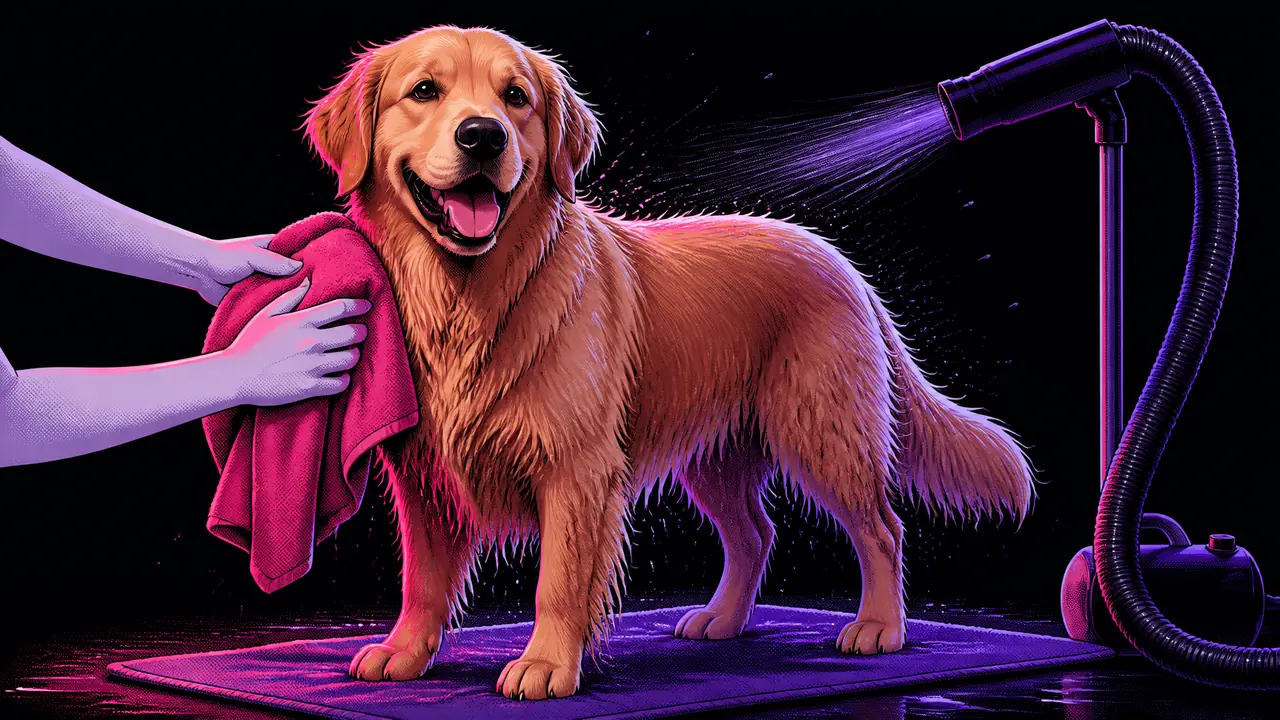
A wet dog in November is a different problem than a wet dog in July. After a bath or a soggy walk, a thick coat can stay damp against the skin for hours, and a dog that is still wet in a cold house gets chilly fast. The American Kennel Club's grooming guidance says drying your dog thoroughly helps keep them warm, prevents mats and tangles, limits the bacteria growth that can lead to skin infections, and cuts down on that "wet dog" smell. Here is how to do it well, based on AKC's advice.
Know how long your dog's coat takes to dry
Short, smooth coats usually dry with a good towel and a warm room. Long coats, double coats and corded or curly coats hold water much longer, and AKC suggests towel-drying first, then finishing with a dog dryer. The more coat your dog has, the more drying matters, because damp hair is what turns into tangles and mats.
Timing helps too. In cold weather, bathe indoors and early in the day so your dog has hours to finish drying before an evening walk. AKC warns against bathing outdoors in cool or cold weather, since it can cause a dangerous drop in body temperature.
Towel-dry by pressing, not rubbing
The instinct is to scrub your dog with a towel as fast as possible. AKC says that is the wrong move: rubbing vigorously creates tangles and mats. Instead, press the towel into the coat and let it soak up the water, section by section.
- Use a microfiber towel. AKC notes that microfiber dog towels are lightweight and absorb more water than an ordinary bath towel.
- Let your dog shake first. Stand back, let them do the first round of drying for you, then start pressing.
- Work from the back toward the head, saving the face, ears and feet for last, since many dogs are touchier there.
- Swap towels as soon as one is soaked. A large dog often needs two.
If your dog dodges the towel, make it a good thing first. AKC suggests letting your dog sniff the towel on the floor and rewarding interest, then touching it to an easy spot like the back, and building up slowly to sensitive areas like the feet.
Use a dog dryer, not your own hair dryer
For thick coats a towel only gets you partway. AKC advises against using a human hair dryer on a dog. A high-velocity (forced-air) dog dryer pushes water out of the coat with airflow, not heat, and AKC says to avoid heat because it can burn the skin. Keep the nozzle away from the face and ears, and stay with your dog the whole time. AKC also cautions against crate dryers, since being shut in a crate with a dryer can be stressful.
Introduce the dryer slowly
The noise is what scares most dogs. AKC's step-by-step approach:
- Set the dryer on the floor, switched off, and reward your dog for sniffing it.
- Turn it on across the room and reward your dog for staying calm nearby.
- Move a little closer each session, handling your dog the way you will when drying.
- Point the nozzle at your dog from a distance on a low setting. A lick mat or scattered treats help here.
- Bring it closer and start drying once your dog is relaxed with the airflow.
Keep sessions short and stop on a good note. A few calm minutes beats one long, scary session.
Short on time? Other options
- Drying coats and bags. AKC mentions microfiber drying coats that work like a bathrobe and keep your dog from rolling in dirt while they dry.
- Skip the full bath. On days when a wash would leave your dog damp at bedtime, a waterless option can freshen the coat. See our shampoo and wipes rankings.
Finish the job
When your dog is mostly dry, brush through the coat to catch any tangles before they set, and keep your dog in a warm room until they are completely dry. Drying time is also a good moment to check the skin for lumps, scrapes or irritation, as AKC points out.
For more on bath day, see how often to bathe your dog, and if winter baths leave your dog flaky, read our guide to winter dry skin in dogs. The towels and dryers above are ranked in our grooming tools rankings.
Sources: American Kennel Club, "How to Dry Your Dog Properly and Why It's Important" (updated April 2026); AKC, "Dog Grooming at Home: Brushing, Bathing, and Nail Care"; AKC, "The Soap and Water of Dog Ownership."