How-to
How to clean your dog's ears at home (and when to leave them alone)
A vet-backed, step-by-step guide to cleaning your dog's ears safely, how often to do it, what to skip, and the signs that mean a vet visit instead.
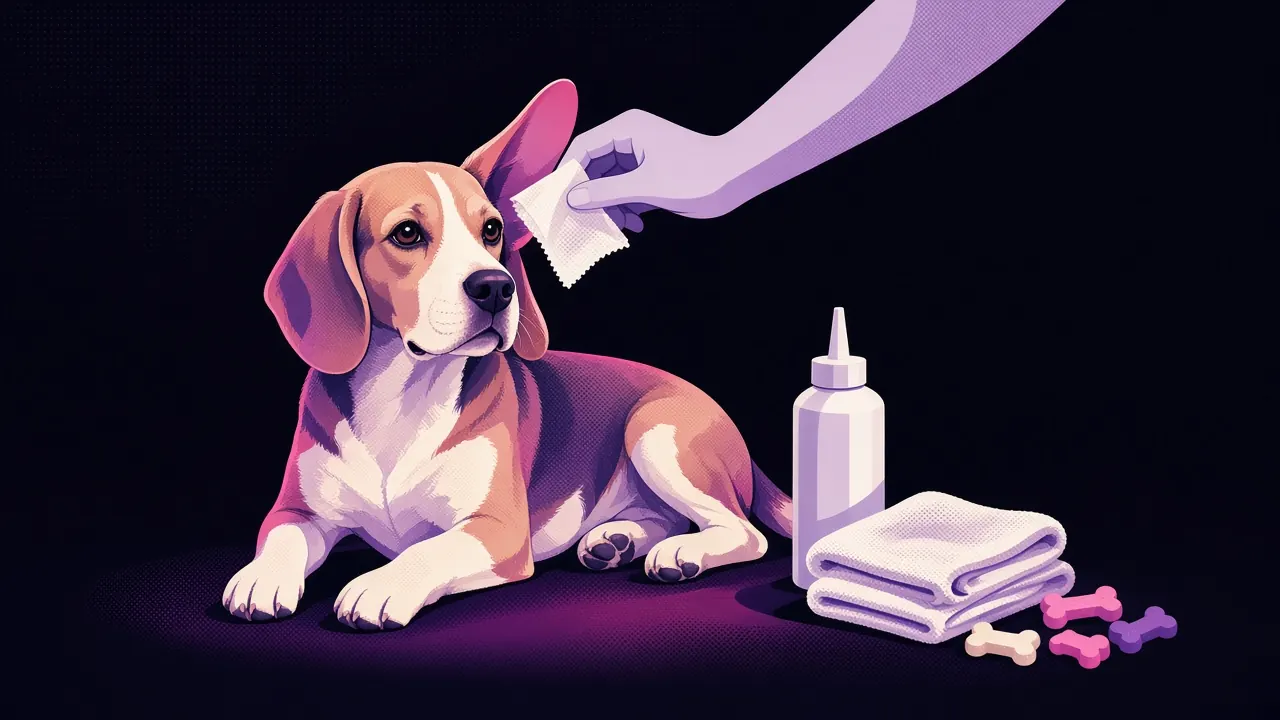
Floppy ears, swimming season that never quite ends, a dog that shakes its head after every bath: ear care comes up for a lot of owners. The good news is that cleaning a dog's ears at home is simple and low risk when you do it the way vets describe. The other news is that plenty of dogs need it far less often than you might think.
Look and sniff before you clean
A quick weekly check tells you more than any schedule. Lift each ear flap and look inside, then give it a sniff. The American Kennel Club (AKC) says a healthy ear is pink, has no unpleasant odor, and isn't dirty or inflamed.
If you see a little wax or dirt, or your dog is shaking its head a bit more than usual, a cleaning is reasonable. If the ear is red, swollen, smells yeasty or seems painful, skip the cleaner and call your vet. VCA Animal Hospitals notes that an inflamed ear could have an infection or even a ruptured eardrum, and some cleaning solutions shouldn't go into an ear like that.
How often is enough?
There is no single right number. Cornell University's College of Veterinary Medicine puts it this way:
- Maintenance cleaning is often every one to two weeks.
- Dogs with allergies, repeat ear infections or floppy ears may need it more often.
- Dogs with healthy, normal ears only need a cleaning when you actually see dirt or debris.
- After swimming or a bath, a routine cleaning is a good idea because wet ears are more prone to trouble.
Cornell and VCA both warn that over-cleaning can irritate the ear canal, which can lead to infection. More is not better here.
What you need
VCA says you don't need special equipment:
- A good-quality dog ear cleaner. VCA recommends against cleaners with hydrogen peroxide or alcohol, which can irritate the canal.
- Cotton balls or gauze. The AKC quotes a vet who prefers absorbent gauze, since paper towels and cotton can leave fibers behind.
- Treats, and a towel for the head shake that is coming.
What you don't need: cotton swabs in the canal. VCA and Cornell both say not to use them there, because they can push debris deeper or injure the canal.
Step by step
This follows the method VCA and Cornell describe.
- Get into position. Small dogs can sit on your lap. For a big dog, back them into a corner with one side against a wall and stand on the other side.
- Straighten the canal. Gently hold the tip of the ear flap and lift it straight up. A dog's ear canal is shaped like an "L", and lifting the flap straightens it.
- Fill the canal with cleaner. Use enough to fill it; a little spillover is fine. Don't push the bottle tip into the ear. Cornell notes that squeezing forcefully with the tip sealed in the ear could damage the eardrum. If your dog hates liquid in the ear, soak a cotton pad instead.
- Massage the base of the ear for about 30 seconds. You should hear a soft squishing sound as the cleaner breaks up debris.
- Wipe, then let them shake. Wipe the inner flap and upper canal, then step back with your towel ready while your dog shakes the rest out.
- Wipe again, only as far as your finger reaches. That is about one knuckle deep. Work from the inside outward.
- Reward, then do the other ear. Treats and praise make the next session easier.
If your dog seems to be in pain at any point, stop and call your vet.
Signs it's a vet visit, not a cleaning
The AKC lists these common signs of an ear infection:
- Head shaking, or scratching and rubbing one ear
- Dark discharge or a strong odor
- Redness or swelling in the canal
- Pain, itchiness, crusting or scabs
Your vet can look inside with an otoscope and check a sample under the microscope to find out whether it's bacteria, yeast, mites or allergies, which all need different treatment. If your dog gets medicated ear drops, VCA says to clean the ears first and then apply the medication.
Our picks for routine cleaning
For most dogs, a gentle, non-stinging cleaner is the place to start. Virbac's EpiOtic Advanced has a neutral pH and was developed with veterinary dermatologists, and it helps dry ears after swims and baths.
If your dog has sensitive ears, Zymox Ear Cleanser skips alcohol and chlorhexidine and is labeled for non-infected, dirty ears.
For dogs that won't tolerate liquid at all, pre-moistened wipes clean the part of the ear you can reach without the squirt and shake.
Pair it with bath day
Since ears should be cleaned after they get wet, bath day is a natural time to do it. A gentle, pH-balanced shampoo keeps the rest of the routine easy on skin. Lil Luv Dog's Liquid Wash tops our bath and coat care ranking.
For more on bath timing, see how often to bathe your dog. For shampoos and wipes, see the best dog shampoos, dry shampoos and wipes, and for brushes, nail tools and the ear cleaners above, see the best dog grooming tools.
Sources: Cornell University College of Veterinary Medicine, Riney Canine Health Center, "How to Clean Your Dog's Ears"; VCA Animal Hospitals, "Ear Cleaning and Administering Ear Medication in Dogs"; American Kennel Club, "How to Clean a Dog's Ears Safely" and "Dog Ear Infections: Symptoms, Causes, Treatment, and Prevention"; manufacturer product information for Virbac, Zymox, Pet MD and Lil Luv Dog.