How to get your cat to drink more water (and whether a fountain helps)
A 10-pound cat needs about a cup of water a day. Cornell's tips for getting more into your cat, from wet food to fountains, and what dehydration looks like.
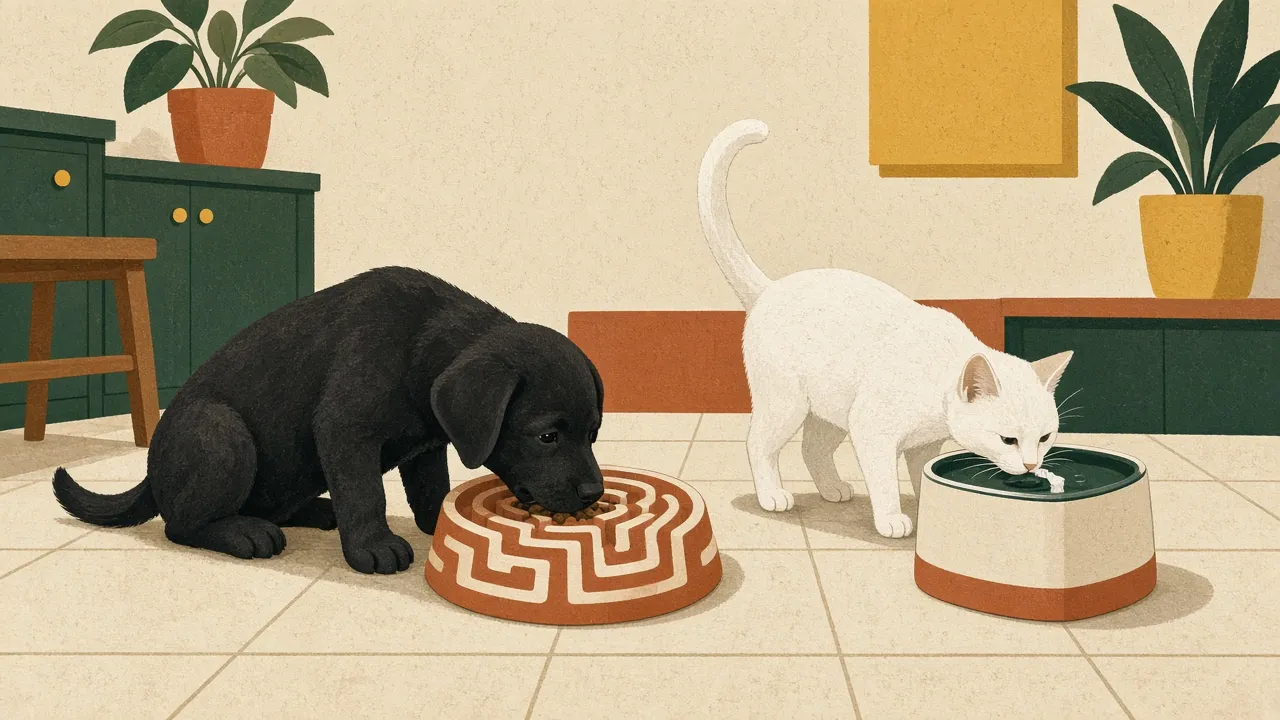
Cats evolved to get most of their water from prey, and many still don't drink much from a bowl. That matters, because staying hydrated supports everything from temperature control to digestion. The Cornell Feline Health Center lays out how much cats need and how to help them get it.
How much is enough?
Cornell's rule of thumb is about 4 ounces of water per 5 pounds of lean body weight per day. So a 10-pound cat needs roughly one cup a day, counting the water in food. Wet food can be up to 80% water, so cats eating it drink less from the bowl. Cats on dry food need to drink more.
Seven ways to get more water into a cat
- Feed some wet food, or add water to their food.
- Put water where they hang out, in more than one easy-to-reach spot.
- Watch for bowl bullies. In multi-pet homes, one cat can block another from the water. Extra stations fix it.
- Keep it fresh. Refill and wash bowls daily.
- Try flavor. Cornell suggests a little water from a can of tuna or low-sodium chicken broth.
- Try a fountain. Some cats drink more from moving water. Cornell is clear that preferences vary, so watch how your cat responds before buying a second one.
- Mind the mouth. Dental pain can make a cat hesitate to drink. If they've stopped, get their teeth checked.
Signs of dehydration
Cornell lists lethargy, weakness, poor appetite, dry or tacky gums and, in severe cases, sunken eyes. You can check skin turgor by gently lifting the skin over the shoulders: in a hydrated cat it snaps back almost immediately. (Older cats can have looser skin even when hydrated.) Kidney disease, diabetes, vomiting, diarrhea and hyperthyroidism are common causes, so if you're worried, call your vet promptly.
More bowls and fountains are in Best Pet Feeding & Hydration.
Source: Cornell University College of Veterinary Medicine, Cornell Feline Health Center, "Hydration."