Guide
Antlers, bones or rubber? How to pick a chew that won't crack your dog's teeth
Why vet dentists warn about antlers, bones and hooves, the thumbnail and kneecap tests to use in the store, and safer chews for stockings this season.
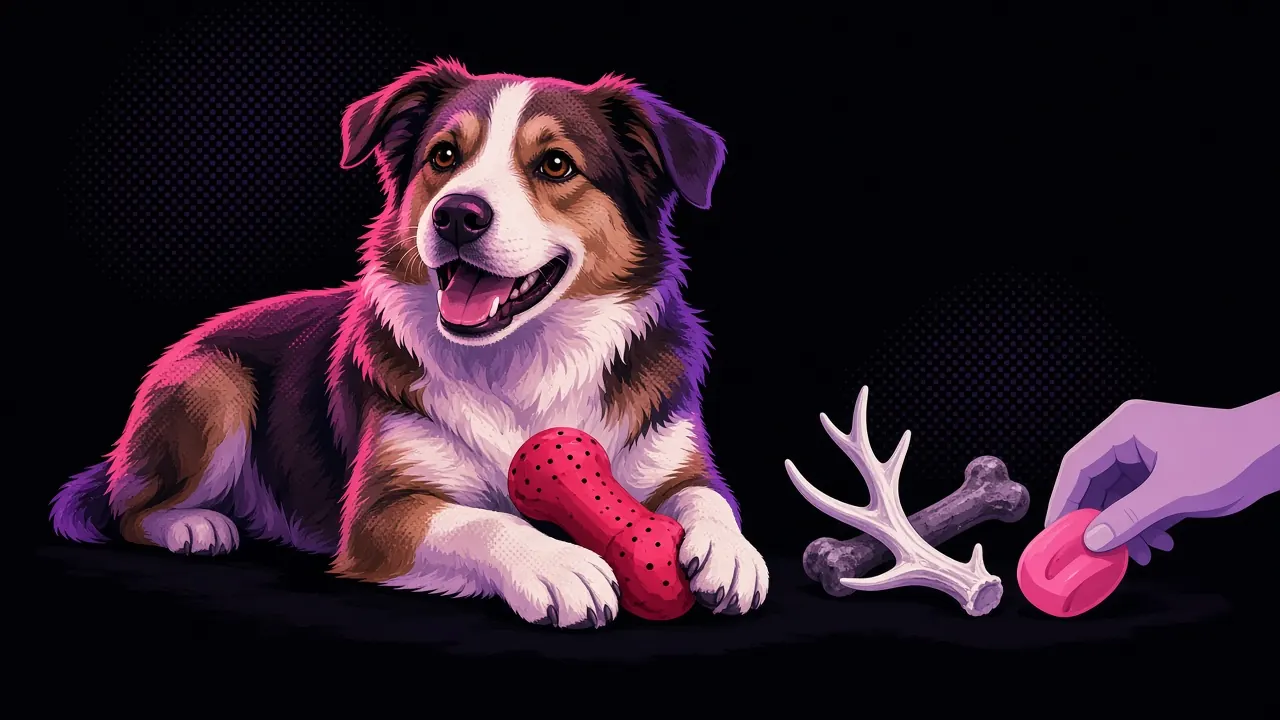
Chewing is normal, healthy dog behavior, and a good chew can keep a bored dog busy on a cold evening. The trouble is that some of the most popular chews on store shelves, and in holiday stockings, are hard enough to break a tooth. Here is how veterinarians suggest telling a safe chew from a risky one before you buy.
Why hard chews break teeth
When a dog bites down on something with a little give, the chew absorbs some of the force. When it bites down on something that doesn't give at all, the force goes back into the tooth. Zoetis Petcare notes that broken teeth are common in dogs, that chewing on hard toys, bones and chews is a major cause, and that the teeth that break most often are the canines and the large upper fourth premolar near the back of the mouth.
Dogs are good at hiding mouth pain. Many keep eating and playing with a fractured tooth, so owners often find out only at a dental exam. Signs worth a vet visit include drooling, chewing on one side, dropping food or flinching when you touch the face.
Chews many vets tell owners to skip
The American Animal Hospital Association (AAHA) lists bones, sticks, rocks, yak milk chews, antlers and rawhides among the hard chews that can damage or fracture teeth. It also warns that some hooves, pig ears and bully sticks can carry bacteria such as Salmonella and E. coli, which can upset your dog's stomach and make people in the house sick too.
Real bones get their own warning. The FDA has cautioned owners against giving dogs bones and processed "bone treats" after reports involving about 90 sick dogs and 15 deaths, with problems that included choking, mouth cuts, vomiting, intestinal blockages and internal bleeding. The agency issued that warning ahead of the holidays, when bone treats often end up in stockings.
Two tests you can do in the store
- The thumbnail test. Press your thumbnail firmly into the chew. If you can't leave a small dent, AAHA and Zoetis say it's too hard for your dog's teeth. A good chew should also bend a little.
- The kneecap rule. Canadian veterinary dentist Dr. Fraser Hale tells owners that if a toy or treat is something you wouldn't want to be hit in the kneecap with, don't give it to your dog.
Antlers, hooves, real bones and rigid nylon bones usually fail both tests. That includes some products sold as "long-lasting" or "indestructible." No chew is truly indestructible, and the hardest ones are the riskiest for teeth.
Size matters as much as hardness
AAHA's rule of thumb is that a chew should be bigger than your dog's snout and slightly wider than its mouth, so it can't be swallowed whole or lodged in the throat. For a power chewer, go one size up from the package's weight range. Take away any chew that has worn down small enough to fit fully in your dog's mouth, and throw out anything that is cracking or shedding chunks.
Safer picks for a stocking
Rubber and flexible chews pass the thumbnail test and can be stuffed with food, which makes a chew last longer without making it harder. A few we rank in our dog toys and enrichment list:
If your dog loves edible chews such as bully sticks, a holder like the West Paw Qwizl keeps the stick from being gulped and lets you take the last stub away before it becomes a choking-size piece:
If you want a chew that helps teeth
Chewing alone doesn't clean teeth. For dental benefit, look for chews and treats that carry the Veterinary Oral Health Council (VOHC) seal, which we explain in what the VOHC seal on dog dental products means, and keep up with brushing your dog's teeth. Our dog dental care rankings cover toothpastes, kits and VOHC-accepted chews. It's also worth reading why tennis balls can wear down dog teeth if your dog is a fetch fanatic.
Quick checklist
- Can your thumbnail dent it, and does it bend a little?
- Would you be fine being hit in the kneecap with it?
- Is it bigger than your dog's snout?
- Will you be around to supervise the first few sessions?
- Do you have a plan to replace it when it's worn or cracked?
If you answer no to any of those, pick a different chew. And if your dog has already been chewing antlers or bones and you notice drooling, one-sided chewing or a chipped tooth, book a vet check.
Sources: American Animal Hospital Association, "Don't Chew On This!"; Zoetis Petcare, "Fractured and Broken Teeth in Dogs"; U.S. Food and Drug Administration consumer updates on bones and bone treats for dogs; College Manor Veterinary Hospital, "The Pitfalls of Choosing Dog Chew Toys" (quoting Dr. Fraser Hale); manufacturer product information for West Paw, KONG and Planet Dog.