Seasonal care
Heated dog beds vs. self-warming beds: what's safe for a cold or senior dog
When a heated bed helps an arthritic or thin-coated dog, when a no-cord self-warming bed is the safer pick, and the safety rules vets give for both.
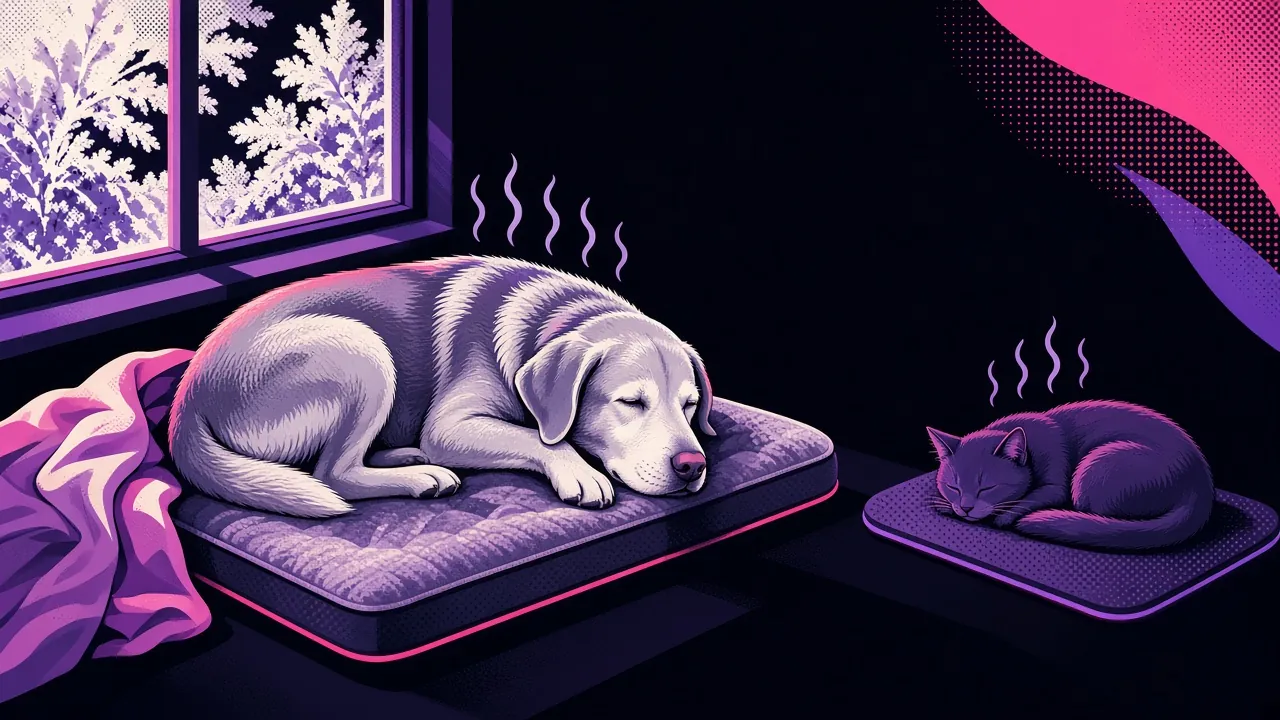
When the house cools off at night, an older dog with stiff hips often struggles to get comfortable. A warm bed can genuinely help. The question is which kind: a plug-in heated bed, or a "self-warming" bed that just reflects your dog's own heat back at them. They are not equally safe for every dog.
Two very different products
Heated beds and pads have an electric element inside. Good ones made for pets use low wattage and a thermostat. K&H, for example, says its pet heaters warm to roughly a dog's body temperature (about 102°F) when the pet lies on them and stay only 10 to 15 degrees above room temperature otherwise.
Self-warming beds and mats have no power at all. A layer of reflective material, similar to a Mylar space blanket, sits inside the padding and bounces your pet's body heat back to them. They are only as warm as the dog makes them, which is exactly why they are so low risk.
Which dogs benefit from extra warmth
The American Kennel Club notes that a heated bed can help senior dogs, particularly those with arthritis, hip dysplasia, circulation problems or spinal injuries, because warmth can ease sore muscles and stiff joints. Veterinarians quoted by Rover add hairless and thin-coated dogs and small breeds that run cold indoors, and suggest that for many dogs, temperatures below about 50°F start to cause cold stress when they aren't moving.
Thick-coated dogs that already pant in a warm room usually don't need either. If your dog keeps leaving a warm bed for the cool kitchen floor, believe them.
When a heated bed is the wrong choice
The same AKC article points out that the dogs who would enjoy heat most can also be the ones most at risk. A dog that can't get up easily may not move off a bed that's become too warm. Vets flag a few situations where a self-warming bed is the better call:
- Dogs with limited mobility. If your dog struggles to stand or shift position, choose a bed with no power.
- Chewers and puppies. A chewed cord is a shock and fire risk. Rover's vet source specifically warns against heated products for puppies.
- Inside a crate. The AKC and VCA Animal Hospitals both caution against heat in a crate or carrier, where a pet can't get away if it gets too hot.
- Overnight, unattended. The AKC's vet advises supervised use of heated beds and a regular bed for overnight sleep.
Never use a human heating pad
This one comes up every winter. VCA Animal Hospitals warns that heating pads can creep hotter over time and burn sleeping pets, especially elderly, arthritic or sick ones that don't wake up fast. Rover's vet source says human heating pads can get too hot for dogs. If you want electric heat, buy a product made for pets with a thermostat and a protected cord.
A simple safety checklist for heated beds
- Check the cord. It should be chew resistant (steel-wrapped cords are common) and routed where your dog can't reach it.
- Leave an exit. Put the bed where your dog can step off onto a cooler surface.
- Supervise first. Watch the first few sessions. Panting or restlessness on the bed means it's too warm.
- Do a hand test. Press your palm on the spot where your dog lies after they get up. Warm is fine; hot is not. Retire any bed with hot spots, shifted padding or chew damage.
- Keep it dry. Water and electricity don't mix, so only use outdoor-rated models in a garage or dog house, and keep them sheltered.
Our picks
For a sheltered garage, porch or dog house you can check on, a thermostat-controlled heated bed is a reasonable choice:
If a soft bed won't survive your dog, a rigid pad is tougher. Put a blanket or crate pad on top:
For crates, puppies, chewers and any dog that can't move around easily, skip the cord entirely:
A self-warming mat on top of a supportive foam bed is a nice combination for a stiff senior: cushioning for the joints and gentle warmth with nothing to plug in. See all of our orthopedic, calming and warming dog beds, and for walks in the cold, our cold-weather dog gear.
If your dog seems sore or stiff more often as the weather cools, mention it to your vet. Warmth is a comfort measure, not a treatment for arthritis.
Sources: American Kennel Club, "Heated Dog Beds: Safety and Choosing the Right One"; Rover, "Are Heated Dog Beds Safe? Experts Explain What To Know Before You Buy"; VCA Animal Hospitals, "True or False: Heating pads are a safe way to keep your pet cozy and warm this winter"; manufacturer product information for K&H Pet Products, Furhaven and Aspen Pet.