Seasonal care
Frozen water bowl? How to keep outdoor dogs and cats drinking in winter
Why outdoor water freezes fast, which bowls to skip in the cold, and how to pick and set up a heated pet water bowl safely.
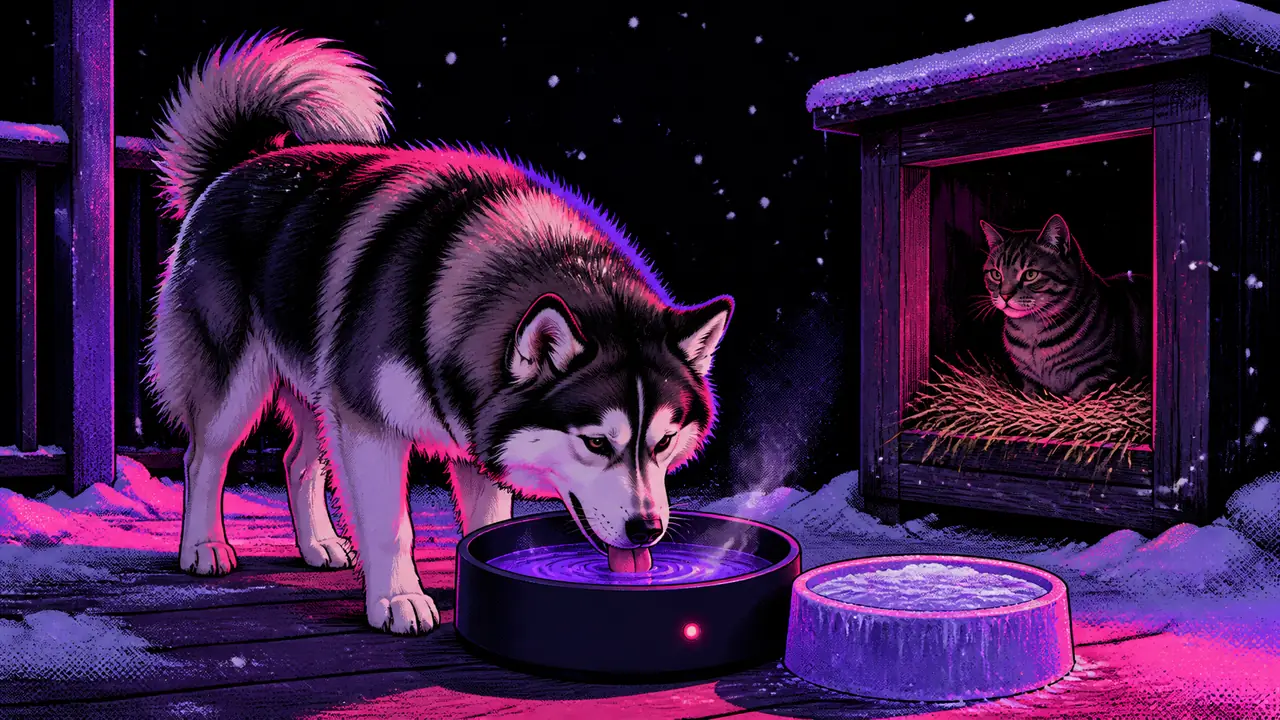
When the overnight low drops below freezing, a water bowl on the porch can turn into a puck of ice before morning. A dog or cat that spends time outside still needs to drink in winter, and VCA Animal Hospitals notes that water matters just as much as food for an outdoor dog's health. Here is how to keep outdoor water open, based on guidance from VCA, the Cornell Feline Health Center and state animal health officials.
Check outdoor water more often than you think
Animals need fresh water at all times, even in winter. VCA advises checking an outdoor dog's water frequently to make sure it is clean, fresh and not frozen, and Massachusetts' winter pet safety guidance says the same: regularly check the dish so the water stays drinkable. Michigan's winter preparedness page adds a step that is easy to miss after a storm: make sure snow, ice or other obstacles aren't blocking the way to food and water.
A quick routine helps:
- Check morning and evening on any night forecast below 32°F.
- Break and replace ice instead of topping it up; a skin of ice reforms fast.
- Clear a path to the bowl after snow so your pet can actually reach it.
- Feed a little more if your pet is outside a lot. VCA and Cornell both note that pets burn more calories staying warm in winter, so ask your vet about portions.
Skip metal bowls outside (unless they're heated)
This is the tip that surprises people. VCA, Massachusetts and Michigan all recommend plastic bowls rather than metal for outdoor water in the cold, because a warm, wet tongue can stick and freeze to a metal dish. New Jersey's veterinary association suggests ceramic or plastic for the same reason. VCA's exception is a heated bowl, since its surface doesn't get cold enough to freeze.
For outdoor cats, Cornell's Feline Health Center suggests thick plastic bowls rather than shallow ceramic ones, and measures such as a solar water heater to slow freezing. Put the bowl in a sheltered spot, out of the wind, and away from the shelter's entrance so spills don't soak the bedding.
When a heated bowl makes sense
If your dog or cat drinks outside on freezing days, or you care for barn or community cats, a thermostat-controlled heated bowl is the simplest fix. The bowl only heats when the water nears freezing, so it doesn't make the water warm, it just keeps it liquid.
For a big dog, or several pets sharing one station, go bigger:
How to set up a heated bowl safely
A heated bowl is an electrical appliance sitting outside, so a little setup goes a long way:
- Use an outdoor-rated outlet or cord and keep the plug and connections out of snow and puddles.
- Protect the cord from chewing. Choose a bowl with a wrapped or armored cord, and route it out of reach where you can.
- Place it out of the wind. K&H recommends a sheltered spot for its Thermal-Bowls so the heater doesn't have to work as hard.
- Clean it like any bowl. Heated bowls still collect debris and slime; unplug before you wash. Some models make this easier:
A heated bowl is not a substitute for shelter
Water is only one part of winter safety. VCA says a dog is happiest and healthiest kept indoors and taken outside for walks, potty breaks and play, and that it's best not to leave any dog outdoors unsupervised when temperatures drop. Cornell's advice for cats is to keep them indoors at all times if you can. If a pet must spend time outside, it needs a dry, draft-free, insulated shelter raised off the ground, with straw bedding. During a winter storm, Michigan's guidance is simple: bring pets inside.
For walks in the cold, see our winter paw care guide and the best cold-weather dog gear. All five heated bowls above are ranked in Best Slow Feeders, Lick Mats, Water Fountains & Heated Bowls.
Sources: VCA Animal Hospitals, Preparing Your Pets for Winter; Cornell Feline Health Center, Cold Weather Tips for Cats; Mass.gov, Winter Pet Safety Tips; Michigan.gov, Winter Weather and Pets; NJVMA, Winter Pet Care Tips.