Seasonal care
Does your dog need a winter coat? Who benefits, and how to choose one
Which dogs actually need a coat or sweater in winter, the 45°F rule of thumb, when a thick-coated dog can skip it, and how to pick a fleece, vest or insulated parka that fits.
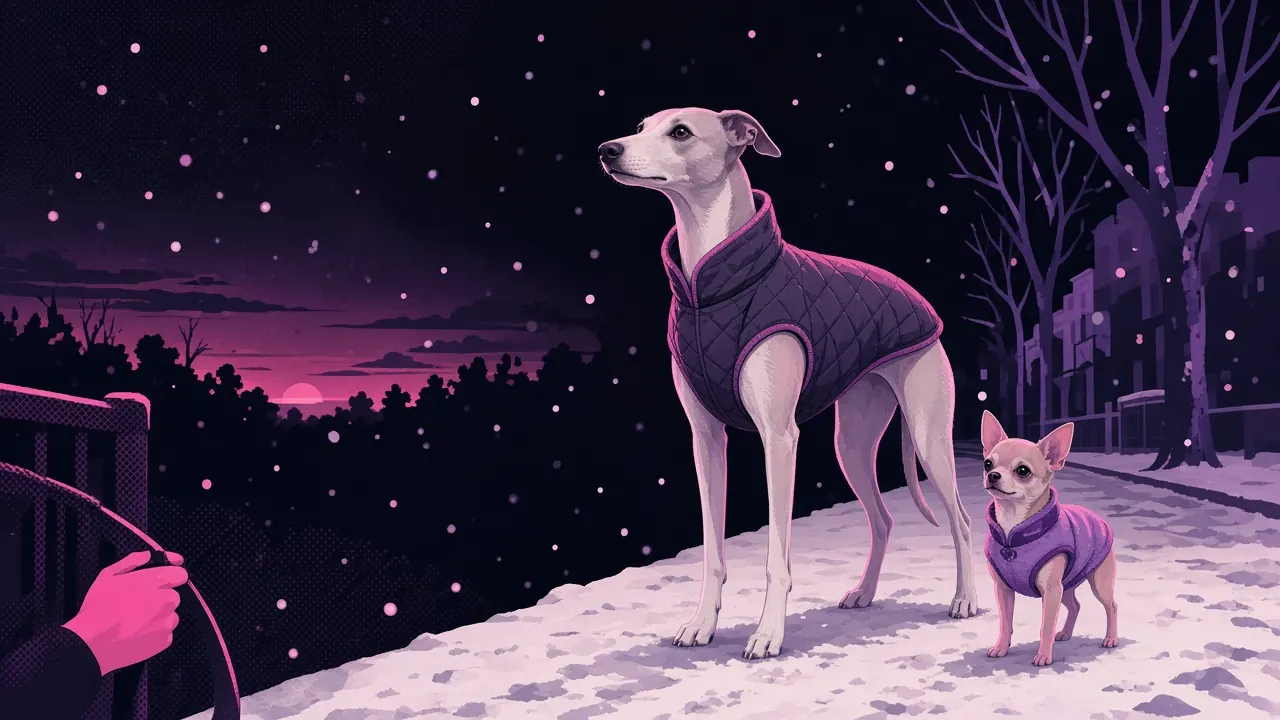
Some dogs love a cold morning. Others start shivering before you reach the end of the driveway. Whether your dog needs a coat comes down to their size, their fur, their age and their health, not the calendar. Here's how to tell, and what to look for if the answer is yes.
The quick rule of thumb
The American Kennel Club's winter care tips suggest a sweater or coat for short-haired dogs once the temperature drops below 45°F, and they say to factor in wind chill. There isn't one temperature that's too cold for every dog, though. AKC vet Dr. Jolee Stegemoller says that if the wind chill is below 20°F, playtime should be kept to short 15 to 20 minute sessions, with time to warm up inside afterward.
Dogs that usually benefit from a coat
The AKC lists several groups that are most likely to feel the cold:
- Small and toy breeds, which have a harder time holding on to body heat.
- Hairless breeds such as the Xoloitzcuintli, American Hairless Terrier and Chinese Crested.
- Dogs with clipped or shaved coats, including Poodles in a short trim.
- Short-legged dogs such as Dachshunds, Basset Hounds and Corgis, whose bellies touch snow and get wet.
- Lean, short-coated dogs such as Greyhounds, Whippets and Azawakhs.
- High-energy, short-coated sporting dogs such as Vizslas and German Shorthaired Pointers.
- Puppies, seniors and dogs with health problems like arthritis, of any breed.
Dogs that can usually skip it
Breeds bred for cold, such as Alaskan Malamutes, Siberian Huskies, Newfoundlands, Bernese Mountain Dogs and Saint Bernards, have thick fur that insulates them, and the AKC notes that healthy large dogs with thick coats could even overheat in a sweater. A thick coat isn't unlimited protection, though: the AKC still warns that long-haired dogs can get too cold in extreme weather if they stay out long enough.
If you're unsure, ask your vet. Dr. Stegemoller recommends talking with your veterinarian about your own dog's needs.
Fleece, vest or parka?
Think about how your dog spends time outside.
A fleece layer for everyday cold. A light, sleeved fleece suits cold, dry days and can go under a shell when it's wet. A full-length zipper means nothing has to go over your dog's head.
A step-in vest for small dogs. Vests are quick to put on and leave the legs free. They don't cover the belly, so they're best for short outings.
An insulated jacket or parka for real cold and snow. For long walks, snow play or a dog who's always cold, look for insulation, a water-resistant shell and belly coverage.
Getting the fit right
- Measure first. Most brands size by back length (base of the neck to base of the tail) and chest girth, and some, like Gooby, size small coats by weight. Check each brand's chart rather than guessing.
- Check the harness. If your dog walks in a harness, look for a leash portal or a harness slit, or a vest with its own D-ring.
- Make sure they can move. Your dog should be able to walk, sit and relieve themselves comfortably.
- Keep it dry. A wet coat stops keeping your dog warm. The AKC suggests drying your dog with a towel if they come in wet from rain or snow.
- Supervise. The AKC says clothing should never be used on an unattended dog or as a substitute for proper care.
A coat is one part of winter care
Coats help, but they're not the whole plan. The AKC also suggests booties when there's a lot of snow on the ground, rinsing salt off paws after walks, and keeping your dog away from drafts and cold floors at home with blankets or a bed. Watch for signs that your dog is too cold, like shivering, and bring them in to warm up. See our guides to winter paw care and night walks after the clocks fall back.
For coats, boots, paw wax and light-up gear side by side, see the best cold-weather gear for dogs, and for a warm spot to sleep, see the best dog beds.
Sources: American Kennel Club, "Does My Dog Need a Winter Coat? Finding the Right Jacket for Your Dog"; American Kennel Club, "Does Your Dog Need a Sweater? Benefits of Dog Sweaters"; American Kennel Club, "Winter Care Tips"; American Kennel Club, "Hypothermia in Dogs: How Cold Is Too Cold?"